Opening Hours
Opening Hours
CAFx Halmtorvet 27
Closed
Open


“Each line is a boundary for someone and a connection for others.” — Ellen Braae
An architect leans in and draws a line. The line slices space into two, and a difference emerges:
The inside | The outside
The architect steps inside and, seeing the skeletal frame, the metabolic pipes, the skin-like wall, imagines the building as a secondary, more robust body—an anatomy of glass, timber, and stone, enclosing the more fragile human form. It holds warmth. It quiets sound. It shelters and seals. But where the building’s skin now touches the world, the architect's skin loses touch with it. What once offered protection now isolates. What once promised shelter now excludes. What once offered comfort now invites indifference.
In the exhibition The Habitable Skin by Studio Coquille and TERROIR, the architect returns to the problem of the line, the skin, and the boundary—not merely with new answers, but, more importantly, with new questions: Could the line become a connection? Could the wall become an interface? And could the skin become habitable for the more-than-human other?
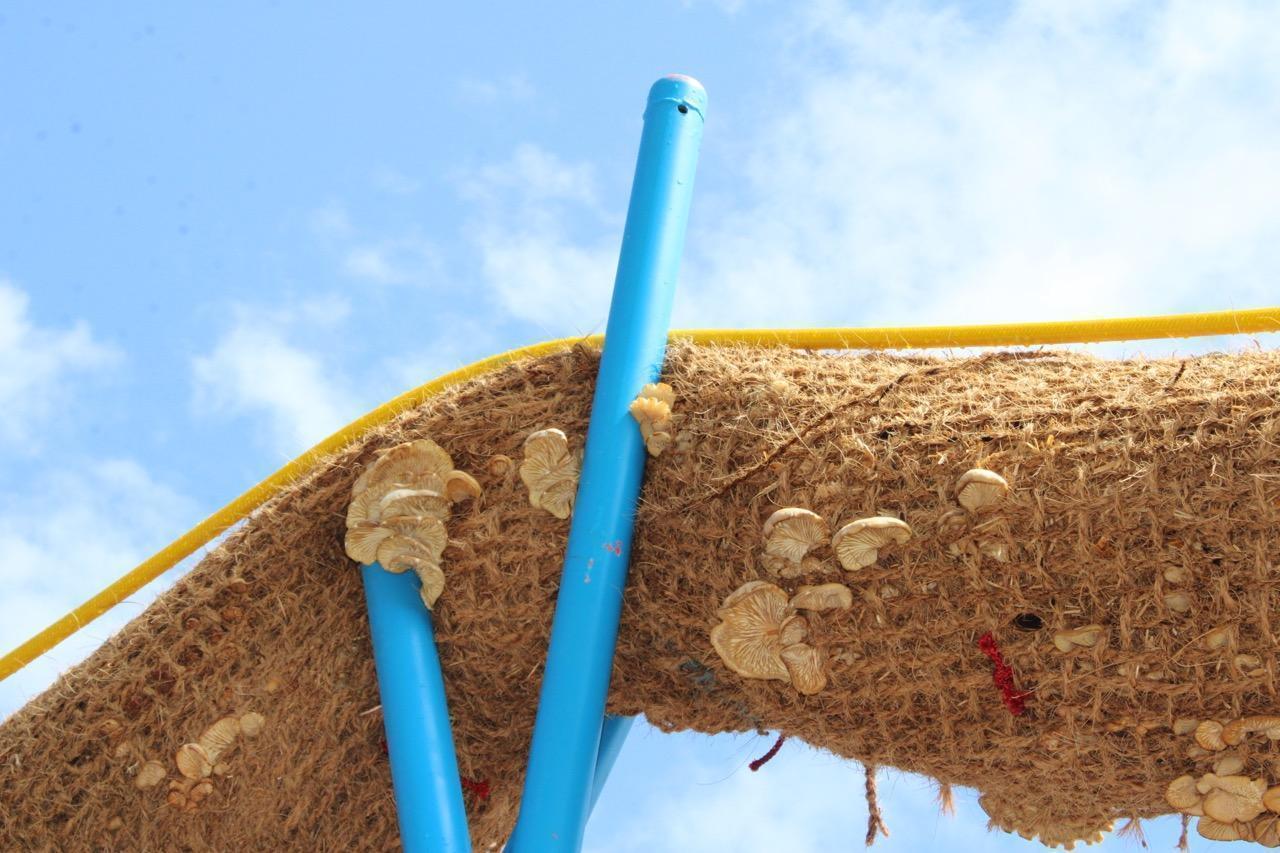
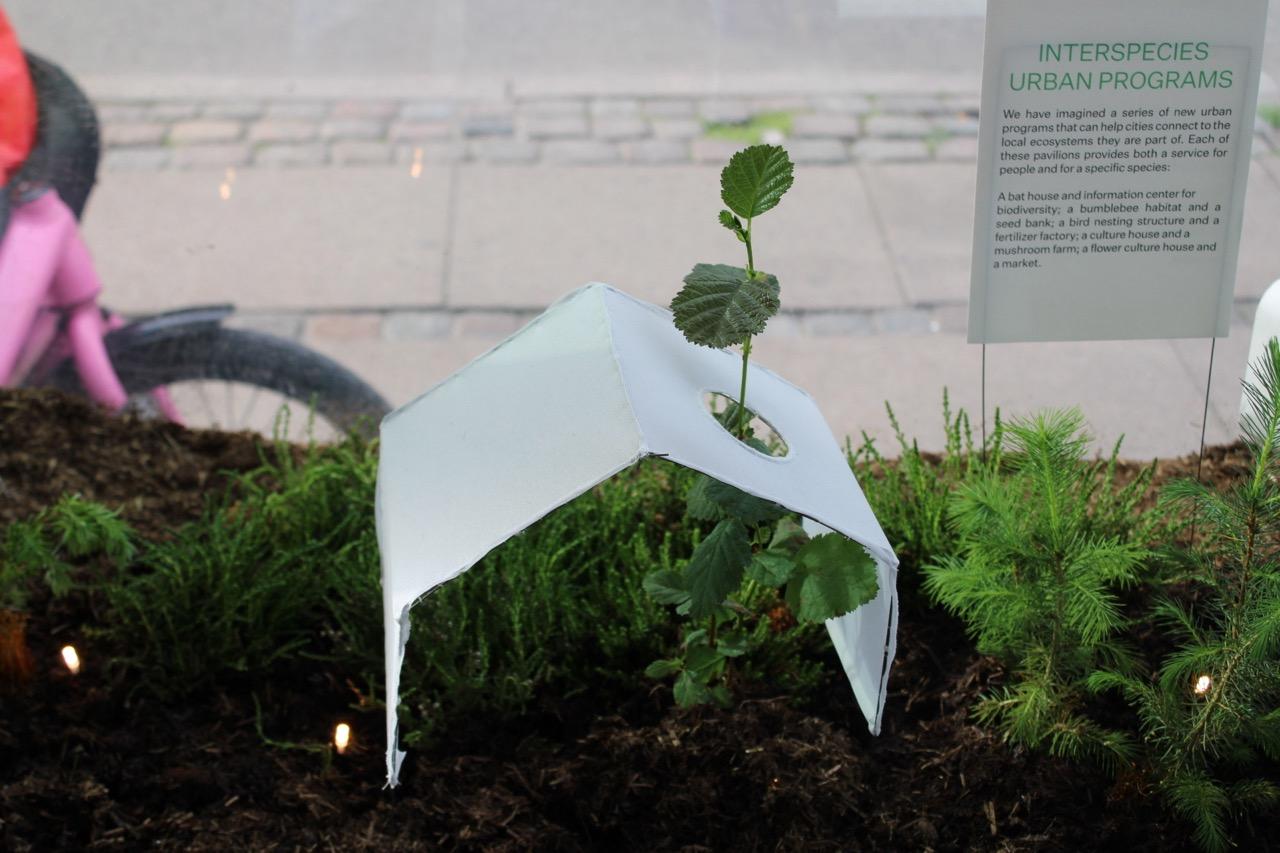
A bridge for insects threads through the urban fabric. A bird’s nest rests atop the roof. Mushrooms surface in the shaded interior. Architecture grows a more porous, living, and sensible skin. Here, you can sense how walls might breathe, how surfaces might host, how architecture might open itself to other species.
Designing for the 99%
"There are no ways of inhabiting which do not first and foremost mean 'cohabiting'." — Vinciane Despret, 2021
Architecture has long answered to human needs: belonging, safety, excitement. But today, in the midst of mass extinction and unraveling ecosystems, welfare can no longer mean human welfare alone. It must extend outward. An Ecocentric Welfare Model invites this widening of care—into soils and rivers, to the winged and the clawed. It asks us to build for more than human comfort, design not just for life but with life, and to listen to the silent workers of the city.
For they are already here: Ants cleaning the streets in New York. Wild boars loosening the earth in Berlin. Bats keeping insect populations in balance in Copenhagen. Plants softening noise and cooling the air, and birds scattering seeds beyond gardens and streets across the planet.
Today, they live invisibly beside us, shaping the world we share, yet struggling to find spaces where their lives, too, might thrive. But tomorrow, the city might become something more—not the solution to the biodiversity crisis, but a rehearsal space for new forms of welfare that extend to the 99% (That Aren’t Human). Improving the quality of life of the whole also means improving the quality of life of the part we call humanity.
The exhibition is accompanied by an extensive public program of field trips, workshops, film screenings, and lectures.

Uninvited Outsiders
“The whole apparatus of fences, cages, pens, and surveillance and monitoring systems is an answer to the monstrous agency of animals and a testament to their world-forming power.” —Fahim Amir, 2020
Every structure invents a chaos—a glitch, a ghost, and, in this case, a growl. For the wild is the chaos of modern architecture: not an exception, but the noise it cannot quiet and the presence it cannot plan for. A gull prying open rubbish bins, a rat thriving beneath café terraces, a fox sheltering under the tram tracks. Life that resists the blueprint—feral, microbial, and insistent. Bacteria spreading in stagnant pipework, and mould blooming behind sealed plaster.
They persist—not as welcome guests, but as uninvited outsiders—and in this persistence, we can read a critique: of mastery, of ownership, of a world arranged for one species alone. The seed of a new architecture lies in listening to this critique—an architecture that is more partial, porous, and provisional. For if the basic operation of modern architecture was control, then the non-human is the pressure point that reveals its myth: the explosion within the diagram, turning stability into movement, control into response, and borders into passage.
Thus, the non-human animal is not a disruption to be solved, but a catalyst for change. Their presence pushes architecture toward innovation, and in turn, the uninvited outsider becomes an unexpected partner, driving new forms of design that are less about control and more about coexistence, less about mastery and more about mutualism. Not a clean future. But a possible one. Today, interspecies architecture is no longer peripheral; it is at the forefront.
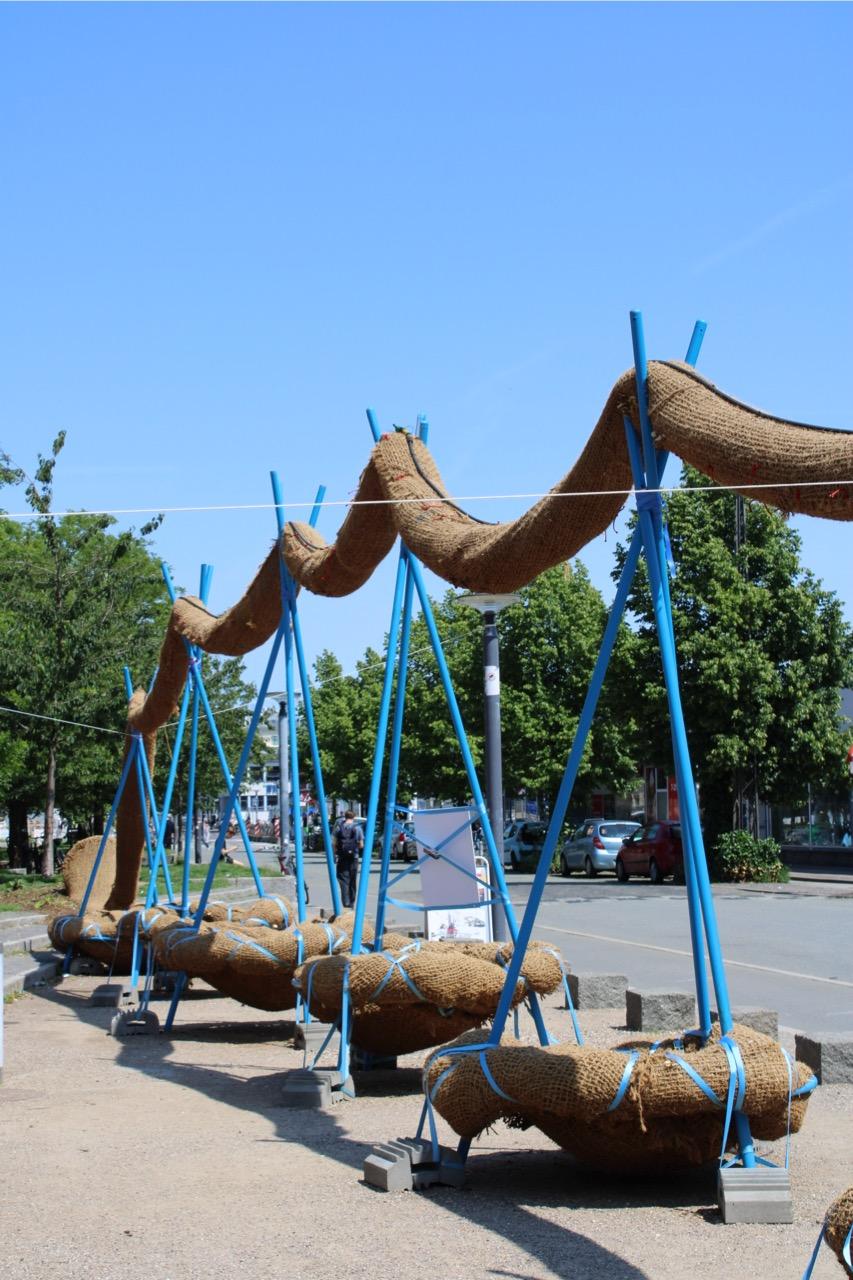
Soft Bodies, Solar Budget
“The animate world is a world of architects. And because there is only one world and each species is in a sense obliged to live in a world produced and designed by others, and vice versa, architecture is always a multispecies affair” — Emanuele Coccia, 2021
We melt sand into glass, pull steel into beams, and blast stone into gravel. We have become soft biological bodies commanding hard geological forces— melting and mining the past to house the present. Burning through buried forests, we feed a global arson of ancient carbon—fuel for cities of concrete, glass, and heat.
Yet, most forms of life do not build this way. They work with what is near, work at room temperature, and make abundant solutions from what is abundant — six base elements and a simple solar budget: Carbon - Hydrogen - Nitrogen - Oxygen - Phosphorus - Sulfur.
Building for other species might mean building as other species. Birds weave, insects burrow, corals construct; an architecture unfolding without architects, belonging to a deeper history of design. Structures grow with time—and return with time. But we have built not with life, but against it. And thus, it is time to favour membranes over monuments, to treat buildings as processes, not products, and to build with what can return, not just what can remain. Not built to last, but to belong.
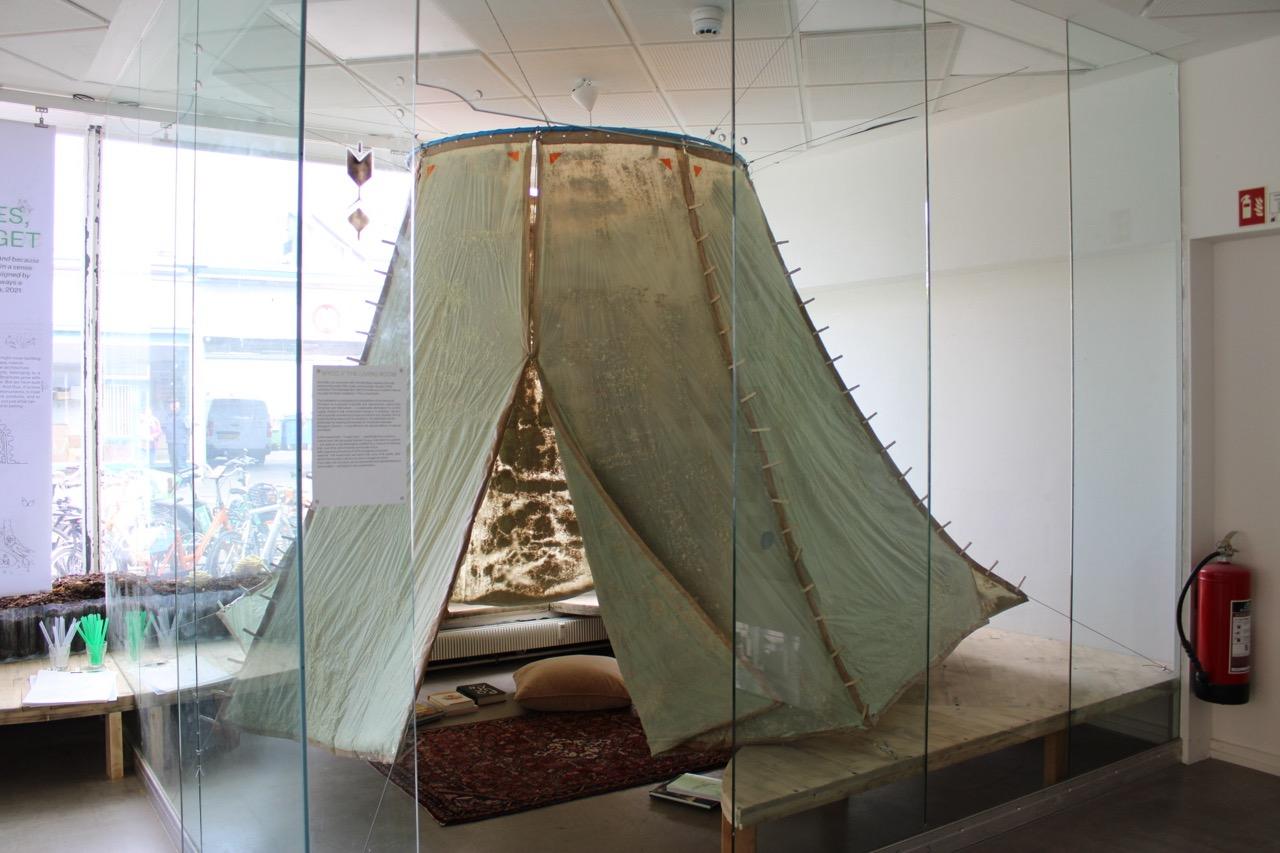
About the Exhibition
The concept was originally conceptualized and shortlisted for the Venice Biennale 2027 in acollaboration between Studio Coquille, TERROIR, Professor Ellen Braae and PhD fellow Taryn Humphrey.
Now redeveloped for CAFx by:
Curators and Architects: Studio Coquille + TERROIR
Mycelium specialist: MYCO
Mushroom and living materials : BYGAARD
Thanks to everyone collaborating to create this exhibition: Frederik Mads Svendsen, Marion De Saint Blanquat, Mikkel Møller Roesdahl, Elodie Claude, Elisabeth Villalón, Nicolaj Juul, prof. Gerard Reinmuth, Marcus Borg, Uffe Emil Thomsen, Laurits Genz, Lasse Antoni Carlsen, Rasmus Holst, Josephine Michau, Pernille Maria Bärnheim, Søren Nørkjær Bang, Ida Willadsen Bang Kjeldsen, Johann Sten Nielsen, Gerd Dahl, Maeve Collins, Niels Martin Terkildsen, Anna Maria Indrio.
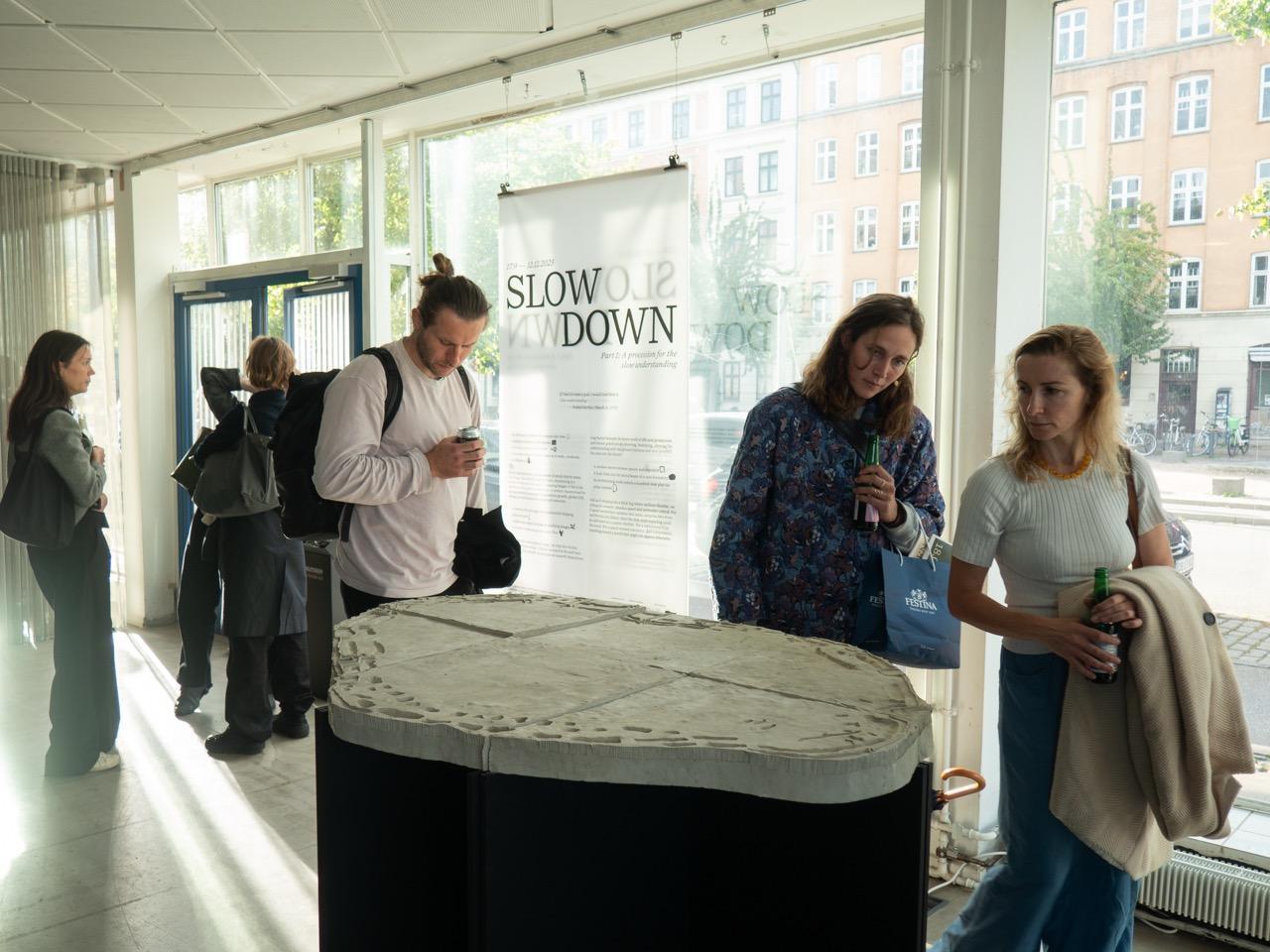
Slow Down
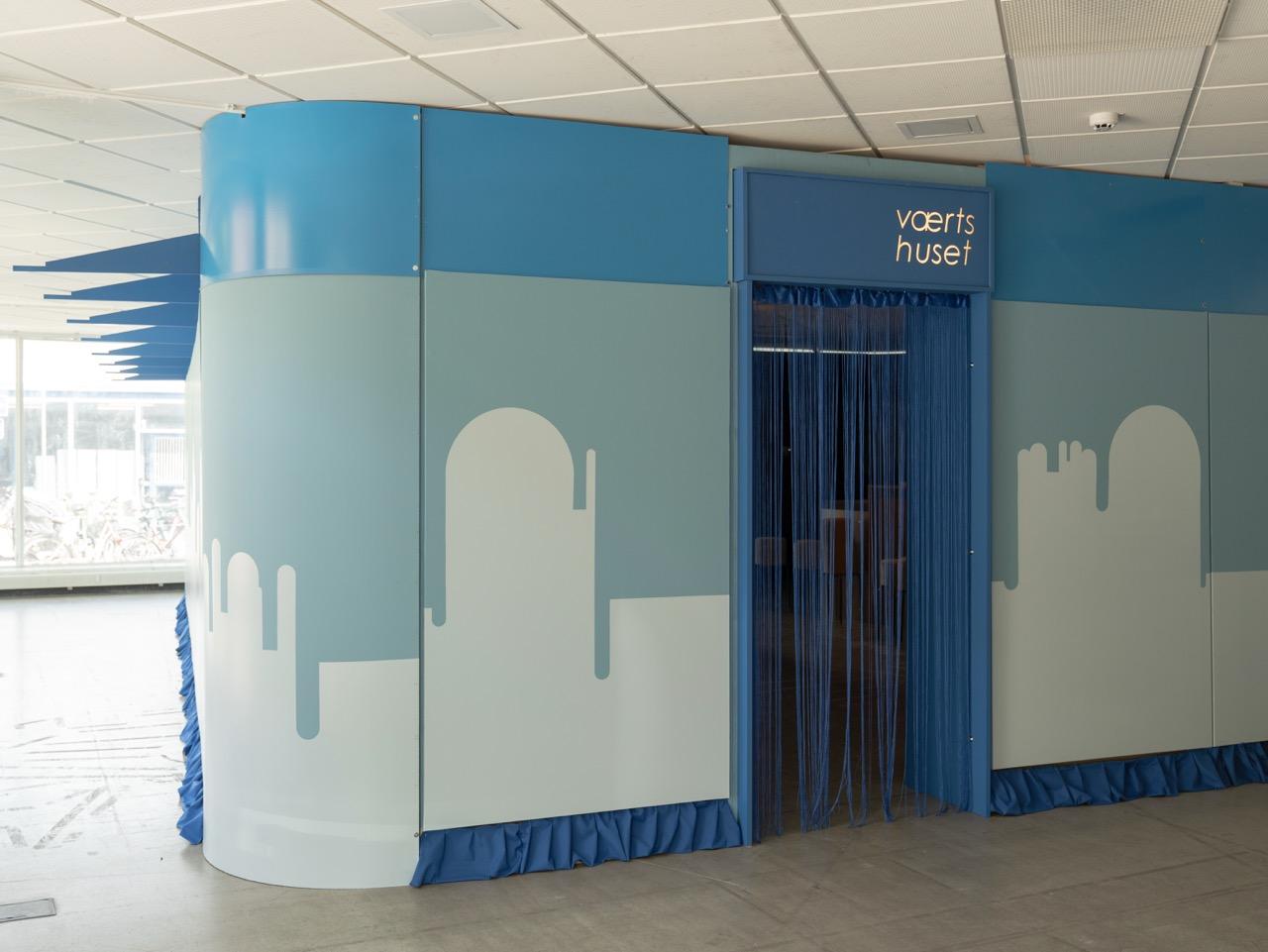
værtshuset
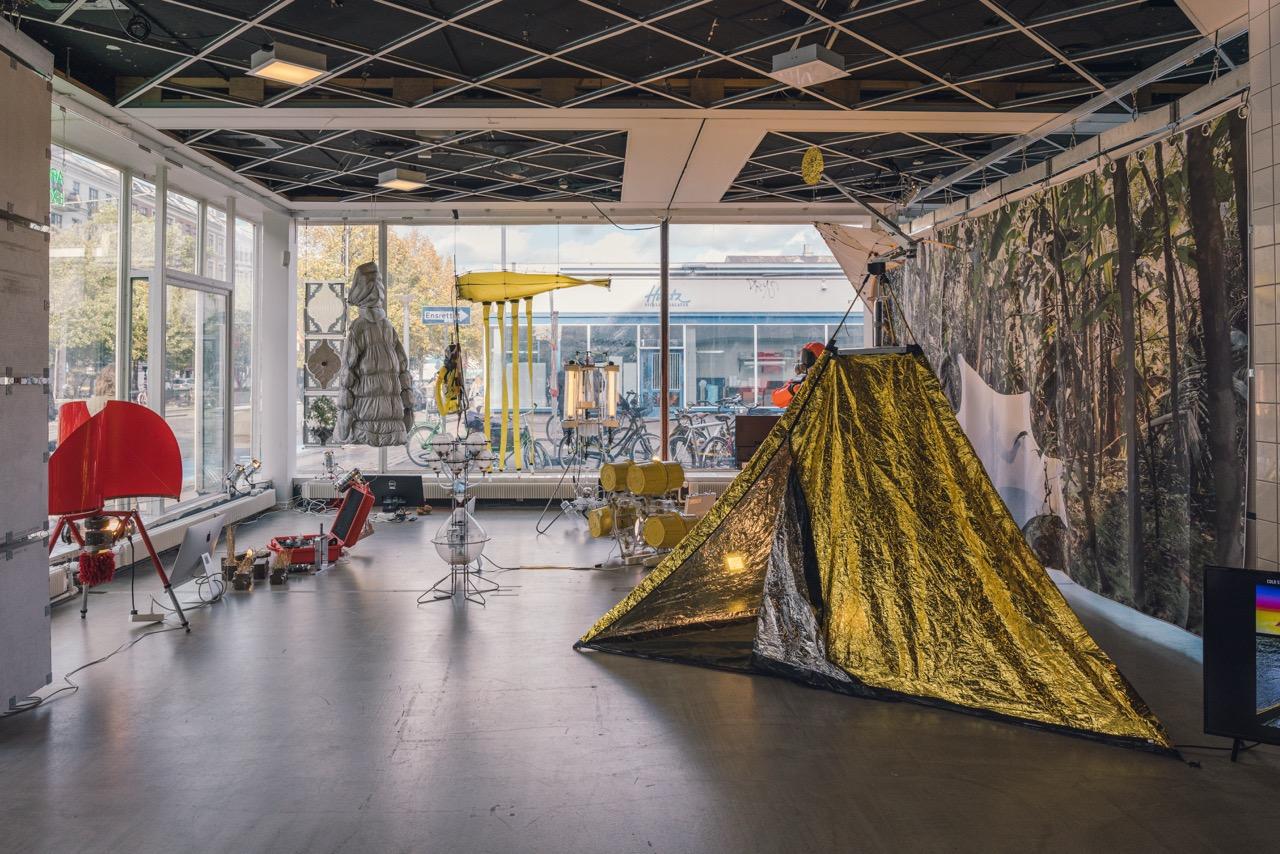
Architecture and Extreme Environments Exhibition
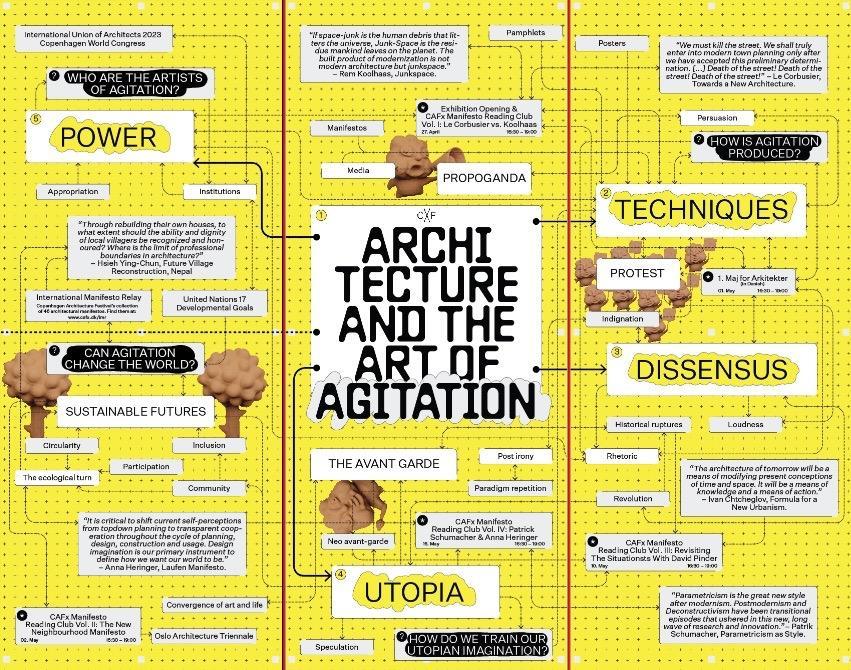
Architecture and the Art of Agitation
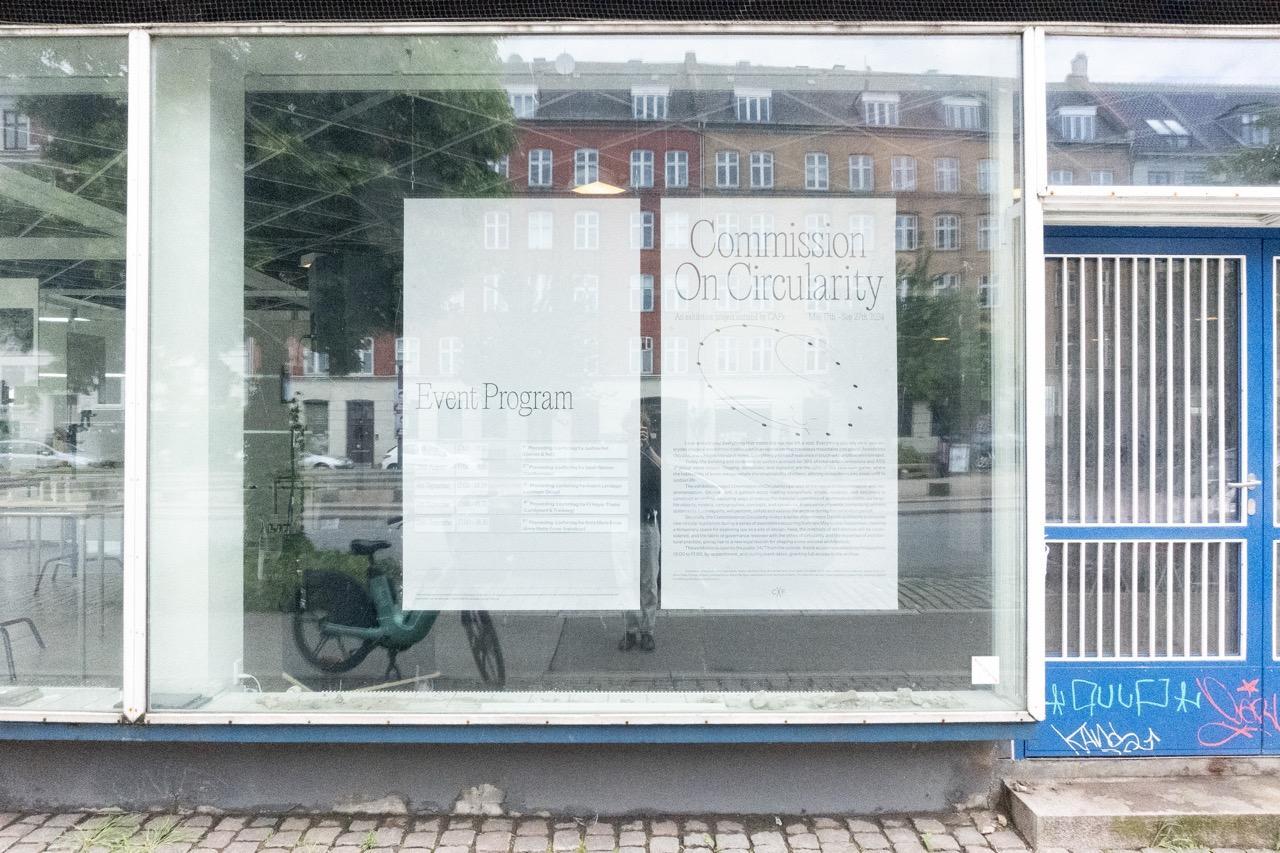
Commision on Circularity
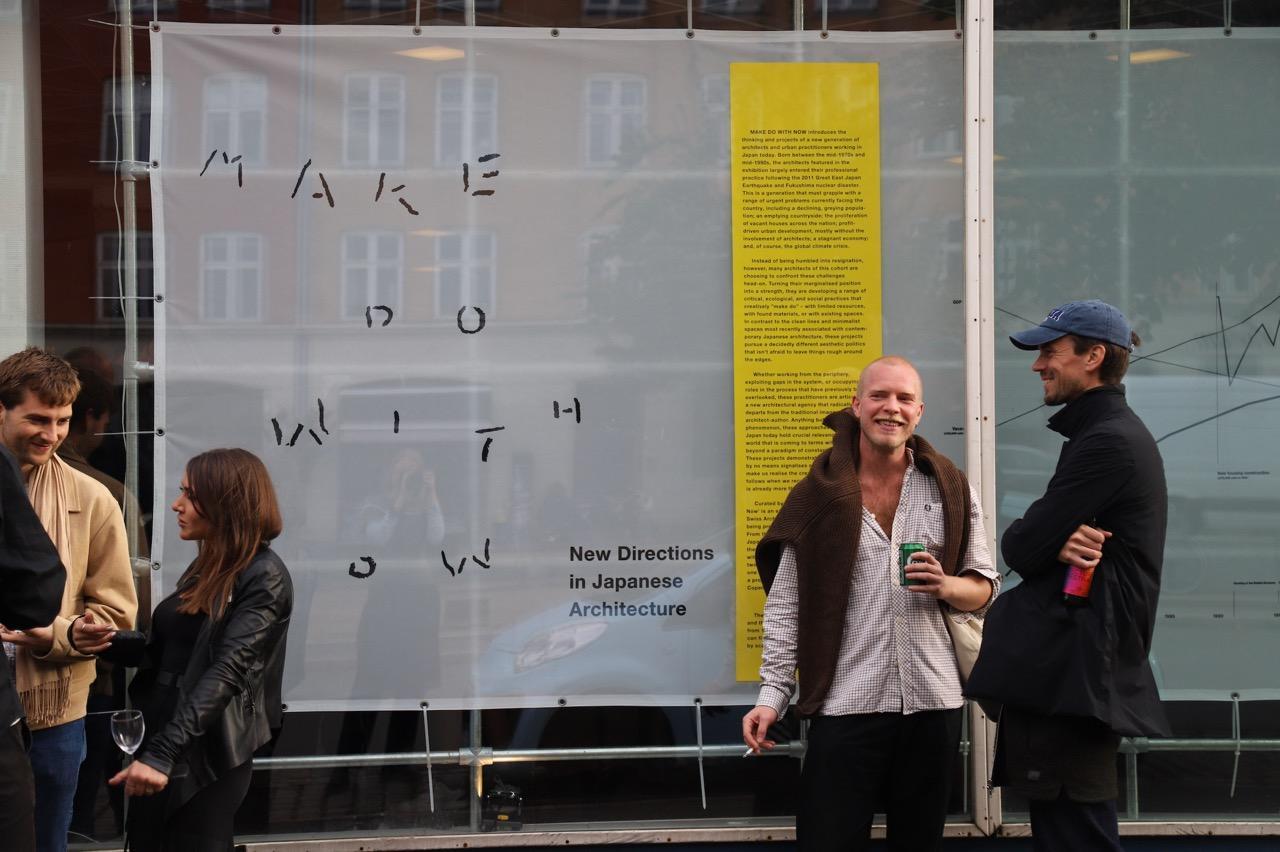
Make Do With Now: New Directions in Japanese Architecture
Foodscapes

Strange Adaptions
Tales of a Nomadic City
Imperfect Assemblies: Towards New Civic Infrastructures