How Can Participation Be Reimagined For Refugees?
Join us for the third event in our new format, “On Air”: The Architecture of Interlegal Democracy
Participation is often understood as something one is either able to do or excluded from, within a single, coherent legal and political system. But for refugees, participation rarely takes this form. It unfolds across a landscape of overlapping authorities, where international conventions, national legislation, and local governance intersect and do not always align.
In this terrain, legal frameworks do not operate separately, nor do they produce clear and consistent outcomes. Instead, they blend, conflict, and are continuously interpreted in practice. Refugees must navigate between these layers, where rights may exist in one context but be limited in another, and where access to housing, work, and civic life depends on how different systems interact. This means that participation is not simply included or excluded, but unevenly distributed and constantly negotiated. It emerges in the gaps between systems, where responsibilities are diffuse, rules are not always consistent, and no single authority fully determines the conditions of engagement.
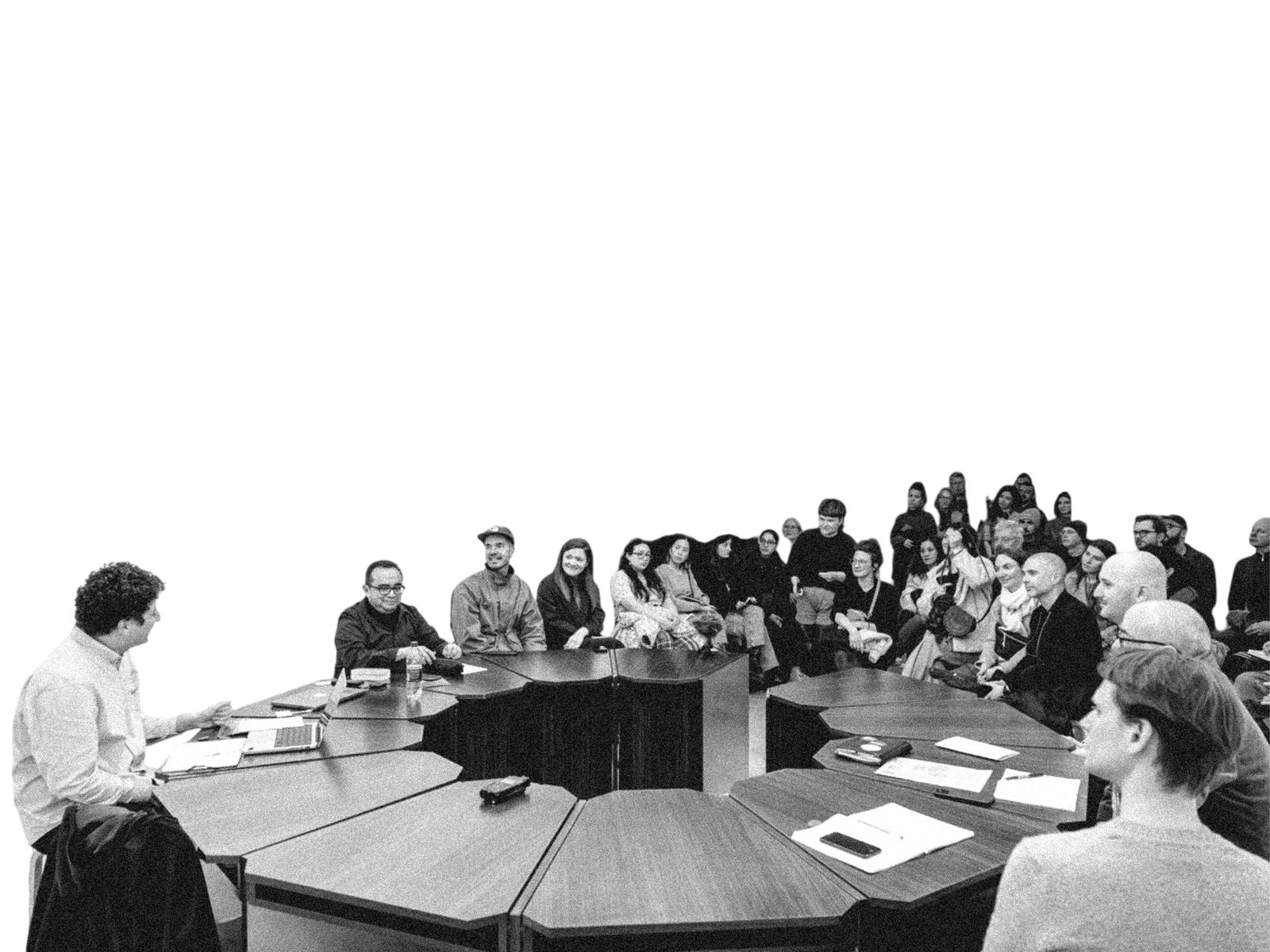
Bringing together actors and researchers working directly with refugee communities, this roundtable explores how participation is practiced and reimagined within these conditions. From municipal governance to civil society initiatives, it asks how democratic engagement becomes possible when it must take shape across fragmented and intersecting regimes of rights.
On the evening you will meet:
Mohammed Zanboa: A Syrian architect, researcher, and photographer based in Luxembourg, whose work on spatial justice and refugee inclusion takes shape through collaborative urban and civic initiatives, including his project Municipality 101. Zenboa is participating as a fellow from the LINA Community.
Tone Olaf Nielsen: is a independent curator and co-founder of the curatorial collective Kuratorisk Aktion, Trampoline House and CAMP / Center for Art on Migration Politics, whose practice has explored questions of forced displacement, structural racism, and the legal status and participation of refugees in Danish society for the past 25 years.
Zachary Whyte: is an Associate Professor at the Centre for Advanced Migration Studies (AMIS), University of Copenhagen, whose research and practice spans housing, language schools, arts, sports, rurality, and policy with refugees and the institutions around them.