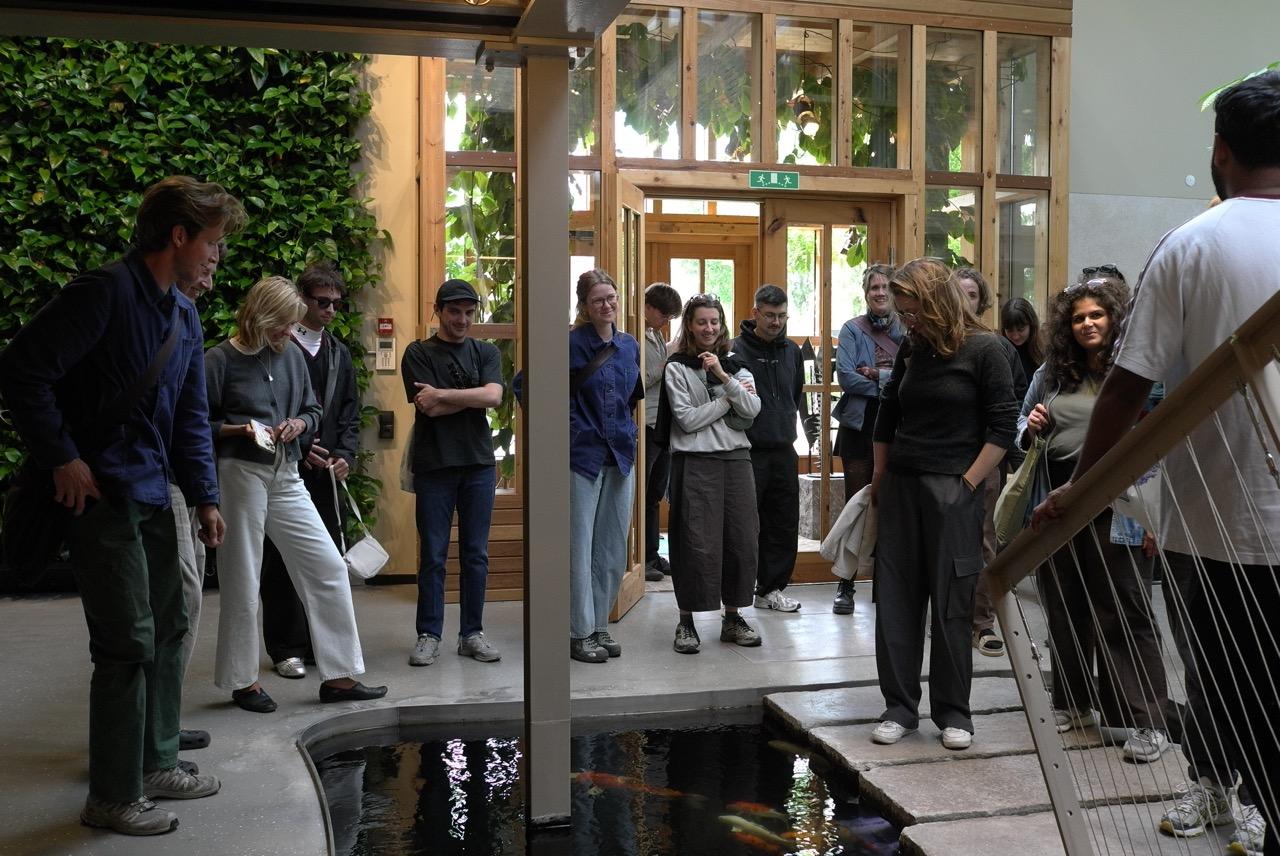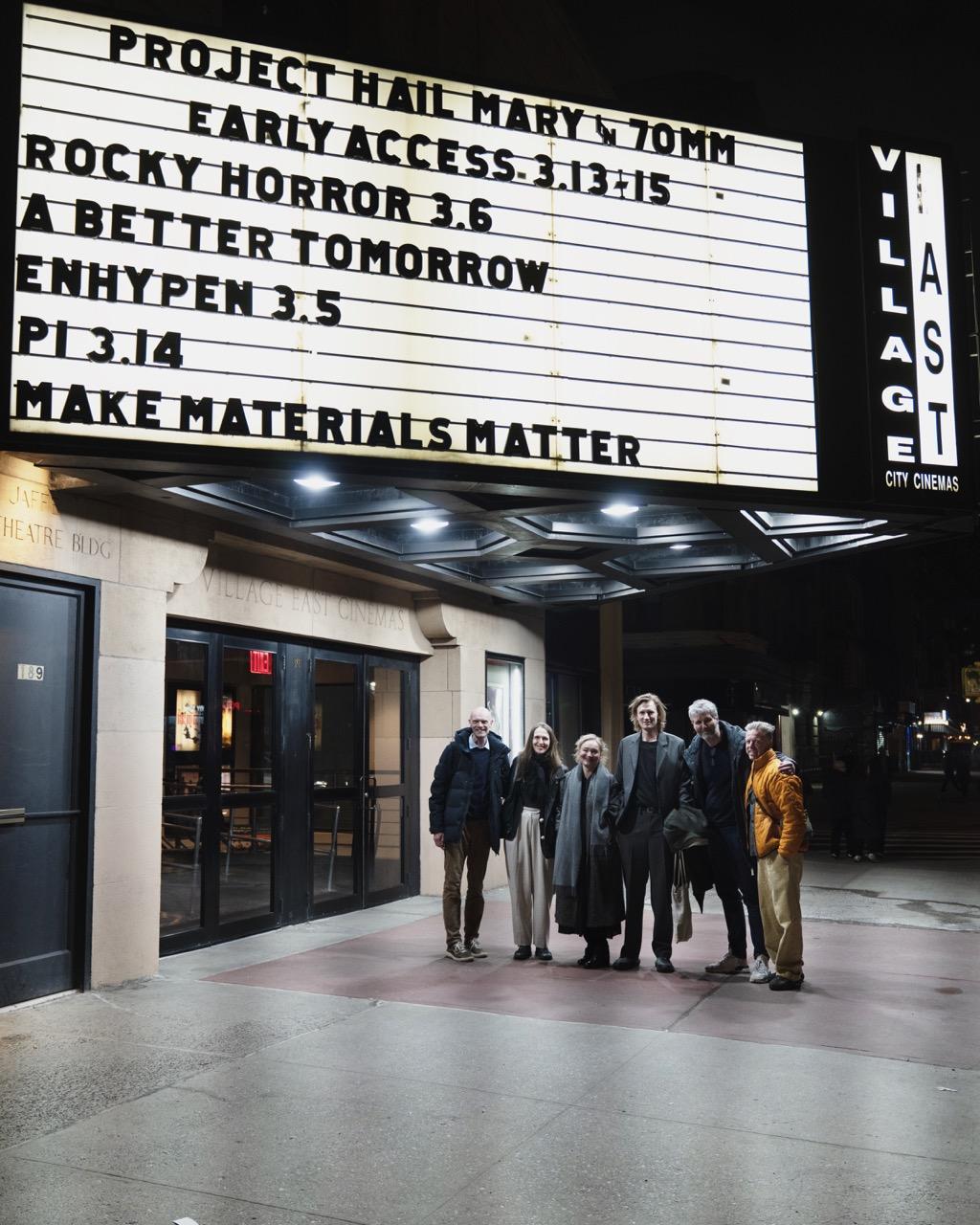
As part of an international delegation from the Copenhagen Architecture Biennial, we recently spent several days in New York engaging with practitioners, researchers, students, and civic organisations about the future of the built environment.
Learning Across Generations
A particularly inspiring exchange took place with students at Parsons School of Design.
Meeting future decision-makers, architects, and researchers reminded us how vital cross-generational dialogue is at this moment in time. The students were impressively engaged and globally oriented. Well versed in topics like adaptive reuse and deeply aware of the importance of interdisciplinary collaboration.
Their perspectives reinforced a hopeful reality. The next generation entering the field understands that the built environment has a central role to play in driving positive societal change and eco-system care.
Dialogue with Practice
Though the students were globally aware and left us with a strong sense of hope, we should nevertheless always be aware of the contrasts between contexts. Not for the sense of disparagement, but for the sake of underscoring the importance of mutual learning and exchange.
New York continues to build at a remarkable pace, with ambitious plans for even more development ahead. There is little indication that the city will slow down.
Yet the motivations behind the Copenhagen Architecture Biennial’s Slow Down theme resonated strongly. Conversations with practitioners revealed familiar frustrations around the design and construction process. Tight timelines, complex stakeholder dynamics, and systemic constraints that shape what ultimately gets built.
These exchanges - whether through a screening session of the film ‘Make Materials Matters’ by Louisiana Channel and Søren Pihlmann, or presentations hosted by Urban Design Forum and Perkins Eastman - demonstrated how meaningful dialogue across contexts can reveal shared challenges, even in very different urban environments.
Thinking Housing Across Differences
During the trip we were also lucky to be able to attend a social housing seminar hosted by the Urban Design Forum, giving a glimpse into one of the central questions facing the New York housing market.
The discussions made clear that social housing in New York City faces critical challenges. The system faces structural barriers: limited funding mechanisms, increasing privatisation pressures, and growing concerns among residents due to the lack of basic maintenance and experiences with unstable energy supplies.
Equally striking were the social dimensions. Many residents feel excluded from decision-making processes around their own homes and neighbourhoods, fear displacement and experience stigma attached to living in social housing. These dynamics risk eroding trust and weakening the very communities housing policy is meant to support. Coming from a Danish context, and with the experience of living with the ‘Ghetto Law’, the feelings of exclusion and insecurity among residents were concerns we could recognise.
But the seminar also showcased a great example of thoughtful careful renovation where both residents and architecture was cared for. We visited the beautiful Harlem River Houses project built in 1936-37 around communal courtyards with public art and variously sized and light-filled apartments. In 2022 it was renovated in stages, ensuring that residents didn’t have to leave their homes for more than a few weeks while being housed temporarily within the Harlem River Houses project itself.
Hearing these perspectives underscored, once again, how important it is that we protect and strengthen Denmark’s model for non-profit housing. New York offered a clear reminder. Housing policy is never only about the buildings. Dignity, belonging, and long-term social stability are critical foundations.
Social Housing Must Also Be Climate Housing
Within the discourse of social housing, buildings are no longer called sustainable if environmental factors are not counted as part of the equation. In other words: Social housing is not truly social if it ignores climate change. In a city like New York, where flooding, heat, and infrastructure vulnerability increasingly shape everyday life, the future of affordable housing cannot be separated from resilience and environmental performance.
Ensuring safe, healthy homes for everyone is becoming a global challenge, and the climate dimension only amplifies its urgency.
The Power of International Exchange
The visit also created valuable connections with organisations such as The World Around, whose work - much like our own - brings together practitioners, thinkers, and civic leaders to address critical issues in architecture and urbanism.
Sharing methods, experiences, and perspectives across borders is essential if we are to tackle the complex challenges facing cities today. International exchanges like this are a reminder that while our contexts may differ, the challenges and the responsibility to address them are shared.
We thank Slots- og Kulturstyrelsen and the Consulate General of Denmark in New York for making the trip possible!
Post Notes